


Street Dude - Homeless Empire
4.64.57K Reviews
App Specs
- Version
- 1.3.2
- Updated On
- License
- Free
- Downloads
- 5,000,000+
- Developer
- SayGames Ltd
- Categories
- Adventure
- Platform
- Android
Screenshots
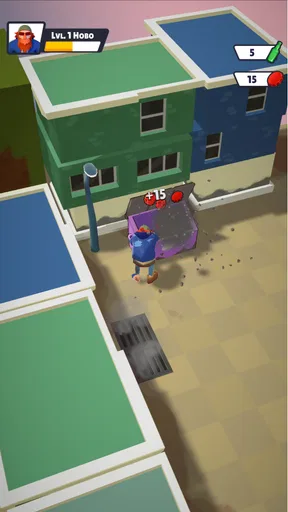
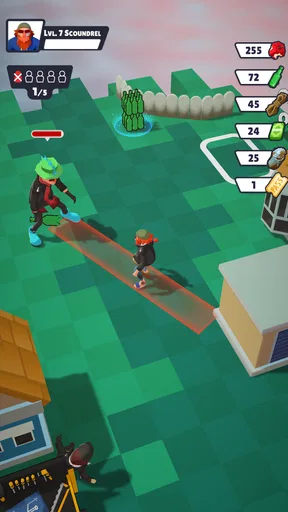
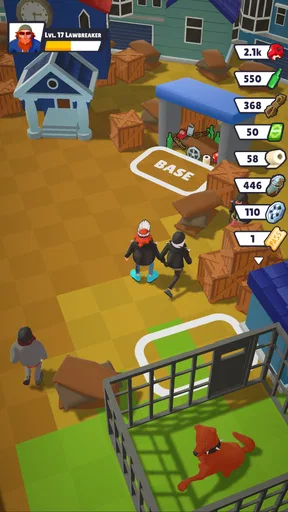
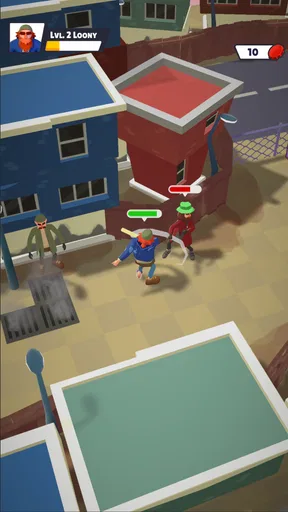

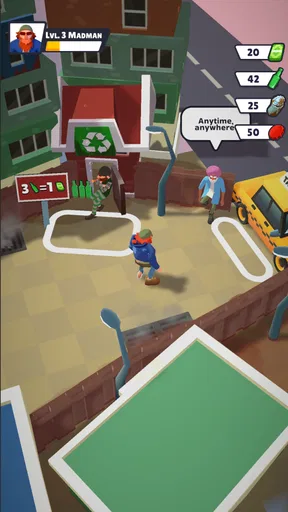
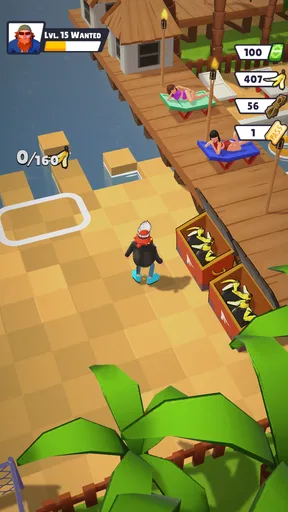
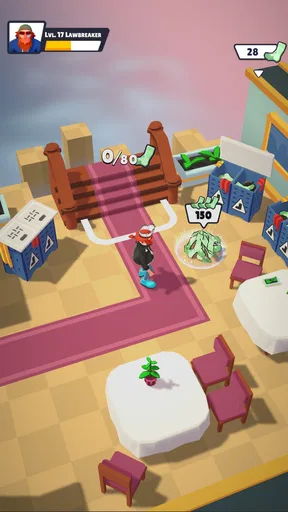
 Analysis by AppCompare
I approached Street Dude - Homeless Empire expecting a quick, exaggerated mobile adventure, and that is exactly where it finds its appeal. It puts me in the role of a street urchin trying to climb from having almost nothing toward a much more comfortable life. The premise is simple, but the game turns that rise into a sequence of short activities, upgrades, and decisions that are easy to understand within a few minutes.
Developed by SayGames Ltd, this free adventure game is aimed at players who enjoy light progression more than complicated storytelling or demanding action. I found it especially suitable for brief sessions: it is the kind of game I can open while waiting for an appointment, complete a few tasks, improve my situation, and put down without losing track of a large plot. Its audience rating is Everyone 10+, and the current release is version 1.3.2 for devices running Android 8.0 or later.
The store listing presents a rags-to-riches idea, but the more useful way to understand it is as a compact progression game wrapped in an adventure theme. You start from a deliberately weak position, then work through the opportunities placed in front of you. The pleasure comes less from discovering a deep world and more from watching each small improvement make the next stage feel possible. Its strongest quality is how quickly it turns a simple goal into a sequence of satisfying short-term objectives.
How the current version feels to play
My first impression was that the game communicates its basic loop quickly. I do not need to study a long tutorial or learn a complicated control scheme before making progress. The early stages are built to give immediate direction, which matters on a phone because a game that delays its main idea can lose me before it becomes interesting.
The adventure framing also gives the progression a clear emotional shape. Instead of beginning with a powerful character and asking me to maintain an empire, it starts with scarcity and makes improvement the central reward. That makes even modest gains feel meaningful at the beginning. A new opportunity, a better result from an activity, or access to the next step feels connected to the larger climb rather than being a disconnected menu reward.
At the same time, I would not describe the experience as a traditional adventure in the same way as a story-heavy role-playing game. There is not enough emphasis on exploration, character relationships, or a large narrative mystery to satisfy someone looking for those elements. The adventure label is better understood as a theme for the climb. If you want a game built around combat depth or a carefully written campaign, this is probably not the right download.
The controls are approachable, which makes the game friendly to casual players. I could concentrate on the immediate objective instead of fighting the interface. That simplicity is a benefit when playing with one hand or during a short break, although it also means experienced players may find the interaction less demanding after the novelty fades.
Worth Reading Before You Choose

EA SPORTS FC Mobile 26 Is a Bigger Football Game, but It Takes Time

Flipboard Shows What News Apps Must Do Beyond the Feed

Switching to Android Auto Means Rethinking Your Driving Routine

Google Calendar Makes a Crowded Week Easier to Manage

Ludo King Makes the Most of the Minutes Between Plans

Baby Panda World Brings Quick Play to Modern Phones, but Its Game Library Feels Busy
One practical strength is that the game gives me a reason to return without requiring a long uninterrupted session. I can make progress in small pieces. A realistic example would be opening it during a commute: I might complete one activity, use the result to improve the character’s position, and stop before reaching the next major decision. That makes it easier to fit into a routine than an adventure that expects me to remember a detailed map or several simultaneous missions.
The progression is the real attraction
The most enjoyable part is seeing the contrast between the starting point and the later direction. The game is designed around visible advancement, so I naturally begin thinking about the next improvement rather than only the current task. This creates a useful rhythm: act, receive a reward, invest that reward, and test whether the new position opens a better opportunity.
I recommend treating the early game as a learning period rather than rushing to spend everything immediately. When a game presents several ways to improve, the tempting choice is often the most visible one. I found it more sensible to notice which upgrade actually helps me continue progressing and which one only makes the current moment look better. That small habit reduces the feeling of wasting resources and makes the climb feel more deliberate.
Another non-obvious strength is that the theme makes repetition easier to tolerate. Repeating a task in a generic idle game can feel like watching numbers rise. Here, the same idea is tied to a personal climb from hardship to success, so the context gives the repetition a little more meaning. That will not transform the game into a deep simulation, but it does help the loop feel more coherent than a collection of unrelated taps.
There is a trade-off, though. Once I understood the pattern of completing an activity and improving the next step, surprise became less important than efficiency. Players who enjoy optimizing a familiar system may appreciate that. Players who need constant mechanical variety may feel that the initial charm is stronger than the long-term challenge.
What the latest release means for players
The current version, 1.3.2, is the version I would use when judging the game today. Its presence suggests that the experience has moved beyond its original release and has received continued attention since launching on September 15, 2022. I would still separate that factual update from assumptions about future content: a version number tells me which build to install, but it does not promise a particular roadmap or a major new feature.
For an existing player, the practical benefit of staying current is straightforward. Using the latest available build gives the most up-to-date version of the experience rather than leaving you on an older installation that may behave differently. I would update before deciding that a problem belongs to the game itself, especially if the issue appears after returning from a long break.
For someone installing it for the first time, the version detail is useful mainly as a compatibility checkpoint. Android 8.0 is the minimum operating system, so older phones may not be suitable. On a supported device, the game’s modest, short-session design should make sense for casual use, but I would still leave enough storage and close other demanding apps if the phone is older or already struggling with performance.
The game has reached over five million installs and carries a 4.6 average from around one hundred two thousand ratings, with roughly four thousand six hundred written reviews. Those figures indicate that the concept has found a substantial audience, but they should not replace personal judgment. A popular casual progression game can still be a poor match for someone who dislikes repetition, optional purchases, or a light narrative.
Where it fits among mobile alternatives
Compared with a conventional adventure game, this one is much easier to pick up and put down. A traditional story adventure usually gives me richer exploration, more dialogue, and a stronger sense of place, but it also asks for more attention. Street Dude - Homeless Empire is the better choice when I want the feeling of moving forward without committing to a long chapter or remembering a complicated plot.
Compared with a pure idle or tycoon game, it has a more character-focused premise. The starting struggle gives the upgrades a personal context, while a standard management game may focus more on buildings, production chains, or abstract income. However, a dedicated tycoon title may offer deeper planning and more meaningful long-term trade-offs. I would choose this game for accessibility and theme, not for the most complex economic model.
It also differs from action adventures that test reflexes. I do not play it primarily to master timing, defeat demanding enemies, or explore a dangerous environment. That makes it a calmer option for a break, but it also limits its appeal for players who want constant tension. Knowing that distinction before installing it can prevent disappointment.
Smart ways to approach the early climb
My first tip is to avoid treating every reward as spending money. The game’s central fantasy depends on improving your position, so the best short-term purchase is not automatically the best long-term choice. I would pause after each meaningful reward and ask whether it improves the next activity, shortens a bottleneck, or simply provides a cosmetic sense of success. That question helps preserve momentum.
My second tip is to play in focused bursts. Because the game is built around compact progress, opening it repeatedly for a minute or two can be more comfortable than forcing a long session. This approach also makes the repetition less tiring. I would stop after reaching a clear improvement instead of continuing until the loop feels mechanical; returning later is more enjoyable when the previous session ended on a satisfying step.
My third tip concerns purchases. The game is free to download, but in-app items range from $0.99 to $49.99 each. I would treat those options as convenience choices rather than requirements for understanding the game. Before paying, I would play long enough to decide whether the basic loop genuinely holds my attention. If the progression already feels repetitive without spending, a purchase is unlikely to fix that underlying issue.
A fourth useful habit is to pay attention to what kind of progress is being rewarded. Some improvements may help the next stage directly, while others may mainly make the current stage feel smoother. That distinction is easy to miss when rewards arrive frequently. I found that choosing based on the next obstacle, rather than the most attractive button on screen, made the experience feel less wasteful.
Who will enjoy it, and who should skip it
I would recommend it to someone who likes accessible mobile games with a clear climb from weakness to success. It works well for casual players, younger audiences within its age rating, and anyone who prefers a game that explains itself through short actions instead of dense menus. It is also a reasonable choice for a player who enjoys checking in several times during the day rather than completing a whole adventure in one sitting.
It may also suit people who enjoy watching a character’s situation improve more than they enjoy direct competition. The appeal is personal progress: starting with very little, making practical gains, and seeing the next opportunity become available. That makes it easy to understand even if you do not normally play management or adventure games.
I would skip it if your priority is a serious story about homelessness, detailed social simulation, or a nuanced portrayal of poverty. The game uses hardship as the starting point for a playful rise, not as a realistic examination of difficult living conditions. Players looking for emotional realism should choose a different kind of experience.
I would also look elsewhere if you need deep controls, complex strategy, or a large world to explore. The straightforward design is part of its charm, but it is also the main limitation. People who quickly tire of repeating familiar actions may enjoy the opening more than the later routine.
Small frictions that affect the experience
The biggest limitation is the balance between accessibility and depth. The game gets me moving quickly, but that same simplicity can make later decisions feel less substantial. When the central loop becomes familiar, the satisfaction depends heavily on whether I still care about the next upgrade. If the goal alone is not enough to keep me interested, there may not be enough mechanical complexity to compensate.
The free-to-play structure is another point to consider. A free download lowers the barrier to trying it, while the listed purchase range means some optional conveniences can become expensive compared with the size of a casual mobile session. I would set a personal spending limit before playing, particularly if I am prone to buying small boosts whenever progress slows.
The theme can also create a mismatch in expectations. The phrase “empire” might suggest a broad business simulator, but the game’s more important identity is the individual climb. I would not install it expecting a detailed organization with many layers of administration. Its appeal is more immediate and character-centered.
Finally, the game’s short-session design is not perfect for everyone. Some players prefer a continuous adventure with a strong ending, while this experience is more comfortable as an ongoing sequence of improvements. I see that as a deliberate format rather than a flaw, but it is worth recognizing before committing time to it.
What I would watch as the game continues
For future updates, I would be most interested in whether the developers deepen the choices without losing the quick accessibility that makes the game approachable. More meaningful decisions would help experienced players, but adding too many systems could undermine the clean early learning curve. The best direction would be extra variety that supports the climb rather than turning it into a complicated spreadsheet.
I would also watch how the balance between free progress and paid convenience develops. Since the game can be tried without an upfront price, the important question for long-term players is whether the normal route remains satisfying. Optional purchases are easier to accept when they save time without making ordinary advancement feel deliberately slow.
Existing users should pay attention to how they feel after returning to the current version. If the basic loop still makes the next improvement appealing, the game has probably retained its main strength. If every session feels like repeating the same action for a smaller reward, that is a sign to take a break rather than spend money trying to restore the original excitement.
New users can make the decision simple: try the opening, notice whether the rags-to-riches framing adds enjoyment, and judge the repetition before considering any purchase. The game does not need a large commitment to reveal what it is. That honesty is useful because the same straightforward design that attracts casual players will turn away people seeking depth.
My recommendation
Street Dude - Homeless Empire is a focused, approachable adventure game built around the satisfaction of improving a character’s circumstances one step at a time. I like its quick onboarding, clear objective, and ability to fit naturally into short breaks. It gives casual progression a distinctive street-life theme and makes early gains feel more personal than anonymous number increases.
I would recommend it with realistic expectations. It is not a deep simulation, a demanding action game, or a story-rich adventure. Its best use is as a light mobile diversion for someone who enjoys repeated activities, visible upgrades, and a simple climb toward a better position. The free entry point makes it easy to test, while the optional item prices mean I would decide on spending only after the basic loop has earned my attention.
For me, the final verdict is positive but specific: this is a good choice when I want a compact progression game with an unusual premise and minimal learning curve. It is a weaker choice when I want complex strategy, emotional realism, or constant novelty. If your ideal phone game lets you make a little progress during everyday downtime and return later without feeling lost, this one is worth trying.
Pros
- Simple controls make the game easy to pick up and play.
- Short tasks work well for quick gaming sessions.
- The humorous presentation keeps the experience lighthearted.
- Progression gives you goals beyond basic resource collection.
- Runs well on many mid-range mobile devices.
Cons
- Gameplay can become repetitive after extended play.
- Frequent ads may interrupt the flow of certain activities.
- Some upgrades require considerable grinding to unlock.
- The humor may not appeal to every player.
- Limited depth may disappoint users seeking a complex simulator.
FAQs for Street Dude - Homeless Empire
What is Street Dude - Homeless Empire about?
Street Dude - Homeless Empire is a casual adventure and management game centered on surviving life on the streets while gradually building your own small empire. You explore different areas, complete tasks, collect resources, interact with characters, and improve your situation through upgrades and strategic decisions. Its humorous presentation makes the subject matter feel lighter, but progress still depends on managing money, items, and opportunities carefully.
How does the gameplay work in Street Dude - Homeless Empire?
The game combines exploration, simple missions, resource collection, character interactions, and incremental progression. You generally move around the environment, gather useful items, complete objectives, earn rewards, and use those rewards to unlock improvements. The controls are designed for mobile devices and are relatively easy to understand, although some activities may require patience and repeated actions. Players who enjoy casual progression games will likely find the mechanics accessible.
Is Street Dude - Homeless Empire free to download and play?
Street Dude - Homeless Empire can generally be downloaded for free, but the exact availability of advertisements, optional purchases, or other monetization features may depend on the platform and version installed. Before downloading, it is worth checking the official Google Play Store or Apple App Store listing for current details. If the game includes in-app purchases, they are usually intended to speed up progress or provide additional convenience rather than being strictly necessary.
Does Street Dude - Homeless Empire require an internet connection?
Some parts of Street Dude - Homeless Empire may work without a constant connection, especially basic gameplay and previously loaded content. However, an internet connection can be required for advertisements, updates, cloud-related features, purchases, or certain online services. Because requirements may change between updates and devices, players should check the store description and test the game after installation if offline access is important to them.
Is Street Dude - Homeless Empire suitable for children?
Parents should review the game’s official age rating before allowing children to play. Although Street Dude - Homeless Empire uses a cartoon-like style and casual mechanics, its theme involves homelessness, street survival, money, and interactions that may not be appropriate for every young player. Advertisements, optional purchases, and humor can also vary by version. Parental supervision is recommended, particularly for younger children using a shared device.


